Every city has a pulse, and it rarely shows up in the postcard shot.
It’s in the steam rising off a food cart at dawn, the way light fractures through a subway grate, the stranger laughing on a stoop who has no idea they just became the best frame of your trip. Urban photography isn’t about documenting landmarks. It’s about catching a place mid-breath.
Why the City Refuses to Sit Still
Nature photography rewards patience. Cities reward instinct.
A alleyway that looks like nothing at noon can transform into pure cinema by 6 p.m., when the light turns gold and slants sideways between buildings. Learning to read that shift — and to be standing there when it happens — is half the craft.
The other half is accepting that you’ll miss plenty of shots. That’s not failure. That’s just how a living, breathing city operates.
The Mindset Shift Every Beginner Needs
Stop hunting for “the shot.” Start noticing textures, gestures, and gaps in the crowd.
Skilled street photographers describe it almost like fishing — you cast your attention wide, stay alert, and trust that something will bite. Forcing a composition rarely works nearly as well as waiting for one to arrive.
Gear That Won’t Weigh You Down
Nobody wants to lug a studio setup through eight miles of cobblestone. The best urban photography kit is the one you’ll actually carry.
- A lightweight mirrorless body with a fast, quiet shutter for candid moments
- One versatile prime lens (35mm or 50mm) instead of three lenses you’ll never swap fast enough to use
- A compact, well-reviewed option from compact travel cameras if you want serious image quality without the bulk of a full kit
- An extra battery and a fast memory card — cities drain both faster than you’d expect
- A cross-body strap, because a bag slung over one shoulder becomes a liability in a crowded market
Minimalism isn’t a compromise here. It’s a strategy. The lighter your setup, the faster you react, and reaction speed is everything in street work.
Phone vs. Camera: The Honest Answer
Your phone is genuinely capable, especially in good light. But it struggles in the low-light, high-contrast conditions that define most interesting urban scenes.
If photography is more than a passing interest, investing in a dedicated body pays off within the first few rolls of shots you actually love. It’s less about pixels and more about control — over depth, over exposure, over the exact sliver of a moment you want frozen.
Reading Light Like a Local
Cities have their own light signature, and it changes block by block depending on building height, glass reflections, and street width.
Golden Hour Isn’t the Only Hour
Sunrise and sunset get all the credit, but blue hour — the twenty minutes just after sunset — often produces richer, moodier urban shots. Streetlights start glowing while the sky still holds color, creating a balance daylight can’t match.
Midday harsh light, usually avoided by portrait photographers, actually works beautifully for architecture. Hard shadows carve buildings into graphic, almost sculptural shapes.
Chasing Reflections and Puddles
Rain ruins some trips and makes others. Wet streets turn into mirrors, doubling neon signs and headlights into abstract, painterly compositions.
Keep your gear protected, obviously, but don’t retreat indoors the second it drizzles. Some of the most striking urban images ever taken happened because someone stayed out five minutes longer than common sense suggested.
Composition Tricks That Instantly Elevate a Shot
- Frame subjects within doorways, arches, or windows to add depth
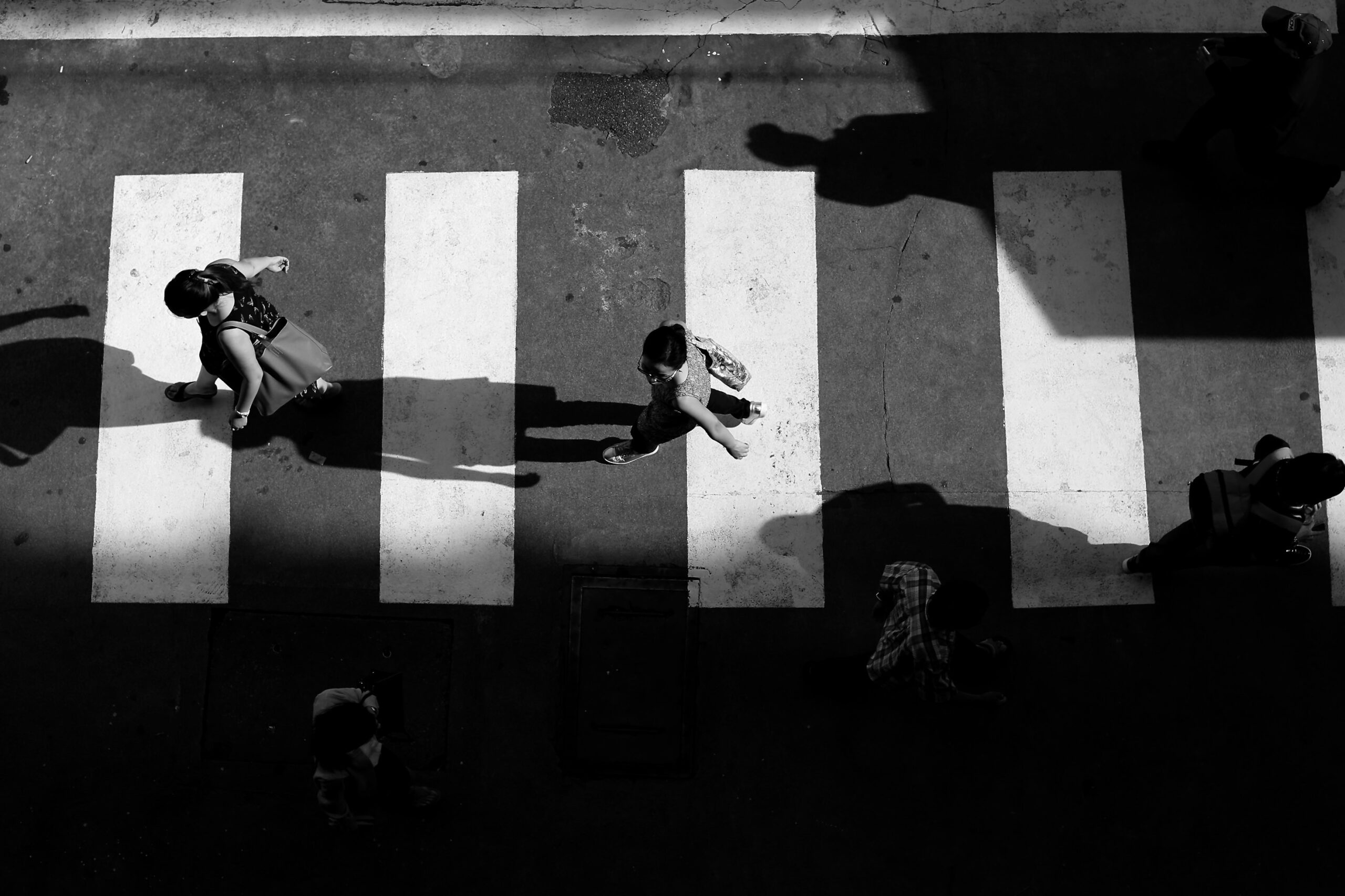
- Use leading lines — train tracks, crosswalks, building edges — to pull the eye through the image
- Look for repetition (identical windows, matching umbrellas) and then break the pattern with one outlier
- Get low or get high; eye-level shots are the ones everyone already has
The Power of Negative Space
A single figure against a massive wall of graffiti says more than a busy, cluttered frame ever could. Empty space isn’t wasted space — it’s breathing room that lets the subject actually register.
Photographing People Without Feeling Like a Creep
This trips up almost every beginner. The trick is confidence, not stealth.
Move through a space like you belong there, camera visible, posture relaxed. Skulking around trying to shoot secretly reads as suspicious; walking with purpose reads as normal.
If someone notices and seems uncomfortable, smile, nod, and move on. A single awkward interaction isn’t worth chasing.
Building Quick, Respectful Rapport
Some of the best portraits happen after a thirty-second conversation. Ask before, or ask after, and always be willing to show the photo on your screen if someone’s curious.
Street photography is a trust exchange, even when it lasts only a few seconds.
Protecting Yourself and Your Gear While You Shoot
Long days wandering unfamiliar neighborhoods come with real risk — pickpockets, sudden weather, the occasional dropped lens on concrete.
Looking into solid travel insurance packages before a big photography trip isn’t paranoia. It’s the same logic as backing up your memory cards: cheap insurance against an expensive mistake.
A stolen camera bag can end a trip’s creative momentum instantly. Coverage that includes gear replacement takes that particular nightmare off the table.
Editing With Restraint
Post-processing should enhance a mood, not manufacture one that wasn’t there.
Push shadows and highlights gently. Adjust white balance to match what you actually felt standing on that corner, not what looks trendiest in a preset pack.
Over-editing is the fastest way to make a raw, honest street shot look like stock photography. Resist it.
The City Rewards Patience and Curiosity
Urban photography isn’t a formula you master once. It’s a conversation you keep having, block by block, city by city.
Some days you’ll shoot two hundred frames and keep three. Other days one lucky glance down an alley delivers the image of the whole trip.
Either way, the city was never posing for you. You just had to be paying attention when it forgot you were there.