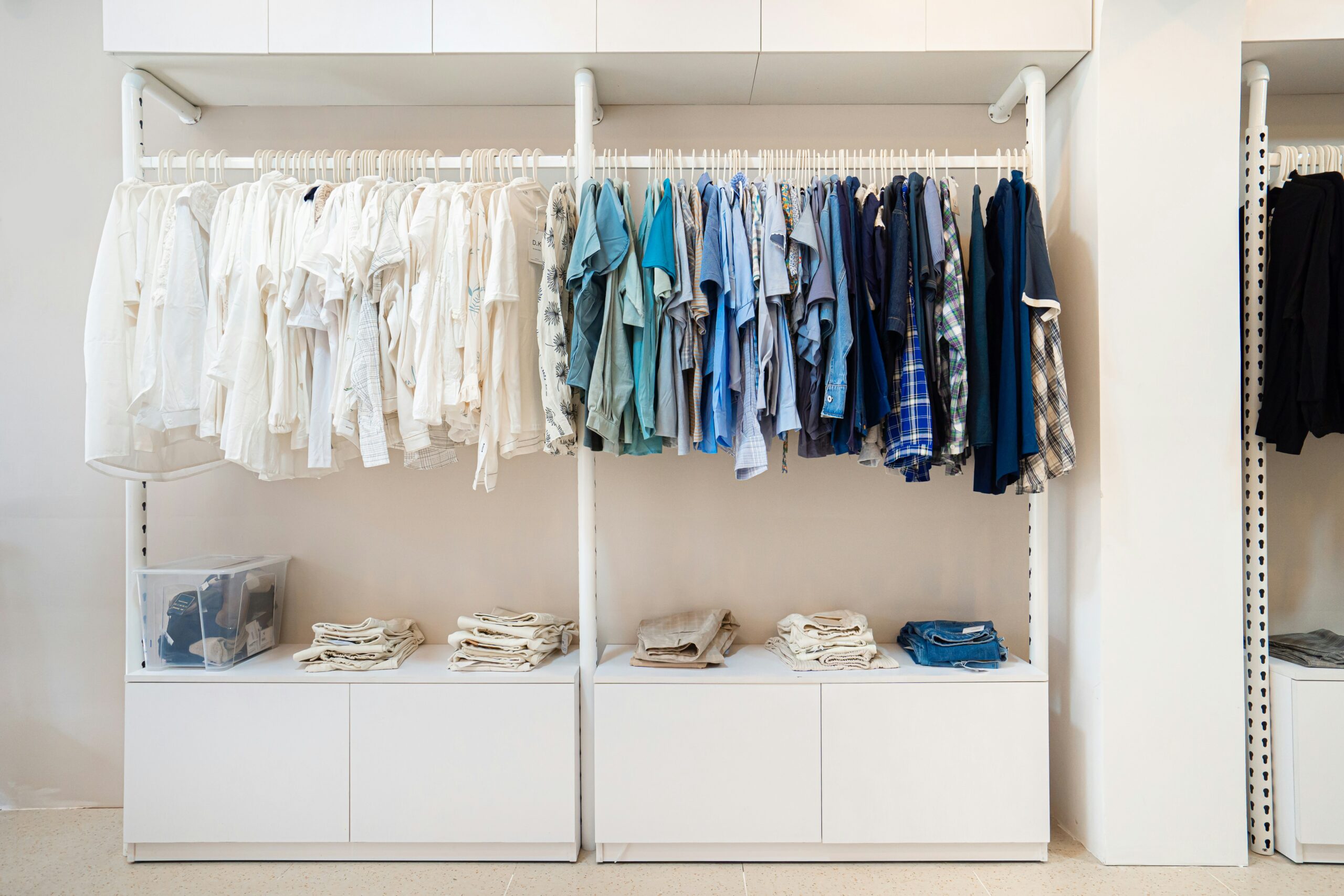
The most powerful thing hanging in your closet might be the empty space around it.
A minimalist wardrobe isn’t about owning less for the sake of restriction. It’s about owning exactly enough — pieces that fit, flatter, and function across every version of your week. For the modern professional, that’s not a trend. It’s a quiet form of authority.
Why Minimalism Became the New Status Symbol
There was a time when a packed closet signaled success. Now, discernment reads as far more sophisticated than volume ever did.
Executives, creatives, and founders alike are gravitating toward tighter edits — fewer garments, sharper choices, better fabrics. It photographs cleaner. It thinks faster in the morning. It ages better, both on the body and in the closet.
The Psychology of Fewer, Better Things
Decision fatigue is real, and your closet is often the first battlefield of the day. A curated wardrobe removes the guesswork before your brain has even finished its coffee.
Fashion psychologists have long noted that constrained choice — a handful of excellent options rather than fifty mediocre ones — actually increases satisfaction with what you wear. Less becomes, quite literally, more.
Building the Capsule: Where to Actually Start
Forget the Pinterest boards promising a “10-piece wardrobe.” Start with your life, not a template.
Look at your last thirty days. What did you reach for repeatedly? What sat untouched, tags still attached, silently judging you from the back of the closet?
The Core Categories Every Professional Needs
- One exceptional blazer in a neutral tone that pairs with nearly everything
- Two or three tailored trousers in versatile, season-spanning fabrics
- A handful of quality knitwear pieces that layer well under structure
- Crisp button-downs in white, ivory, or soft blue
- One statement coat worth the investment, since outerwear does the heavy visual lifting
Quality over quantity isn’t a cliché here — it’s math. Five garments worn forty times each outperform twenty garments worn twice.
Choosing Fabric Like It’s an Investment Portfolio
Cheap synthetic blends pill, sag, and end up in landfill within a year. Natural fibers age instead of degrading.
Look for organic cotton, responsibly sourced wool, linen, and Tencel. These materials soften and improve with wear rather than falling apart under it.
Reading Labels Like a Professional
Certifications matter more than marketing language ever will. GOTS (Global Organic Textile Standard), OEKO-TEX, and Fair Trade Certified are worth learning to spot on a hangtag.
Brands committed to genuine sustainability tend to be transparent about sourcing, dyeing processes, and factory conditions — not vague about them. If a label can’t tell you where a garment was made, that silence is information too.
The Color Palette That Works Overtime
Minimalist wardrobes thrive on a restrained palette: black, white, camel, navy, and one or two accent tones that reflect your personal signature.
This isn’t about being boring. It’s about engineering maximum mix-and-match potential from minimum pieces.
Building Your Signature Neutral Base
Pick a dominant neutral — say, camel or charcoal — and build outward. Every new piece should earn its place by pairing with at least three existing items.
A single scarf or accessory in an unexpected hue can do more visual work than an entire “statement outfit” ever could.
Where Sustainability Meets Style
Choosing wisely doesn’t mean sacrificing polish. Some of the most elegant garments on runways today come from labels built entirely around ethical production.
Exploring a curated list of [SUSTAINABLE APPAREL BRANDS] is often the fastest way to shortcut the research most people spend months doing on their own. Quality sustainable fashion has moved far past the scratchy-linen stereotype of a decade ago.
Small Brands Are Rewriting the Rules
Independent designers, unburdened by mass-production pressure, are often the ones pushing fabric innovation the hardest. Recycled cashmere, deadstock silk, plant-based leather alternatives — the smaller the label, sometimes the bolder the material experimentation.
Supporting these brands isn’t charity. It’s simply better design, made by people paying closer attention.
Accessories: The Quiet Power Move
A minimalist wardrobe leans hard on accessories to create variation without adding clutter to the closet itself.
- A structured leather tote that transitions from meetings to dinner
- One fine gold or silver watch, worn daily until it becomes part of your identity
- A silk scarf that can double as a bag accent, hair wrap, or neck piece
- A single pair of elevated sunglasses that outlasts every trend cycle
Rotating a small set of minimalist fashion accessories gives even a five-outfit wardrobe the illusion of twenty distinct looks. The accessories do the storytelling; the garments provide the canvas.
Caring for Fewer Garments So They Last Longer
When your wardrobe shrinks, every single piece works harder — which means care routines suddenly matter enormously.
Cold water washes, air drying, cedar blocks against moths, and proper garment bags for travel all extend a piece’s usable life by years, not months.
The Repair-First Mentality
A loose button or a small tear used to mean a trip to the donation bin. Now, it means a trip to a tailor.
Mending clothing rather than replacing it is quietly one of the most sustainable habits a professional can adopt, and it costs a fraction of buying new.
Dressing for Longevity, Not Just the Season
Trend cycles move fast, but a well-built minimalist wardrobe is designed to sidestep that churn entirely.
Ask, before every purchase, whether a piece will still feel relevant in five years. If the answer wavers, that hesitation is usually the honest answer.
The Quiet Confidence of Owning Less
A minimalist wardrobe isn’t about deprivation. It’s about clarity — walking into a closet every morning that reflects exactly who you are, without static or noise.
The modern professional doesn’t need more options. They need better ones, chosen with intention and worn until they’ve earned every mile.